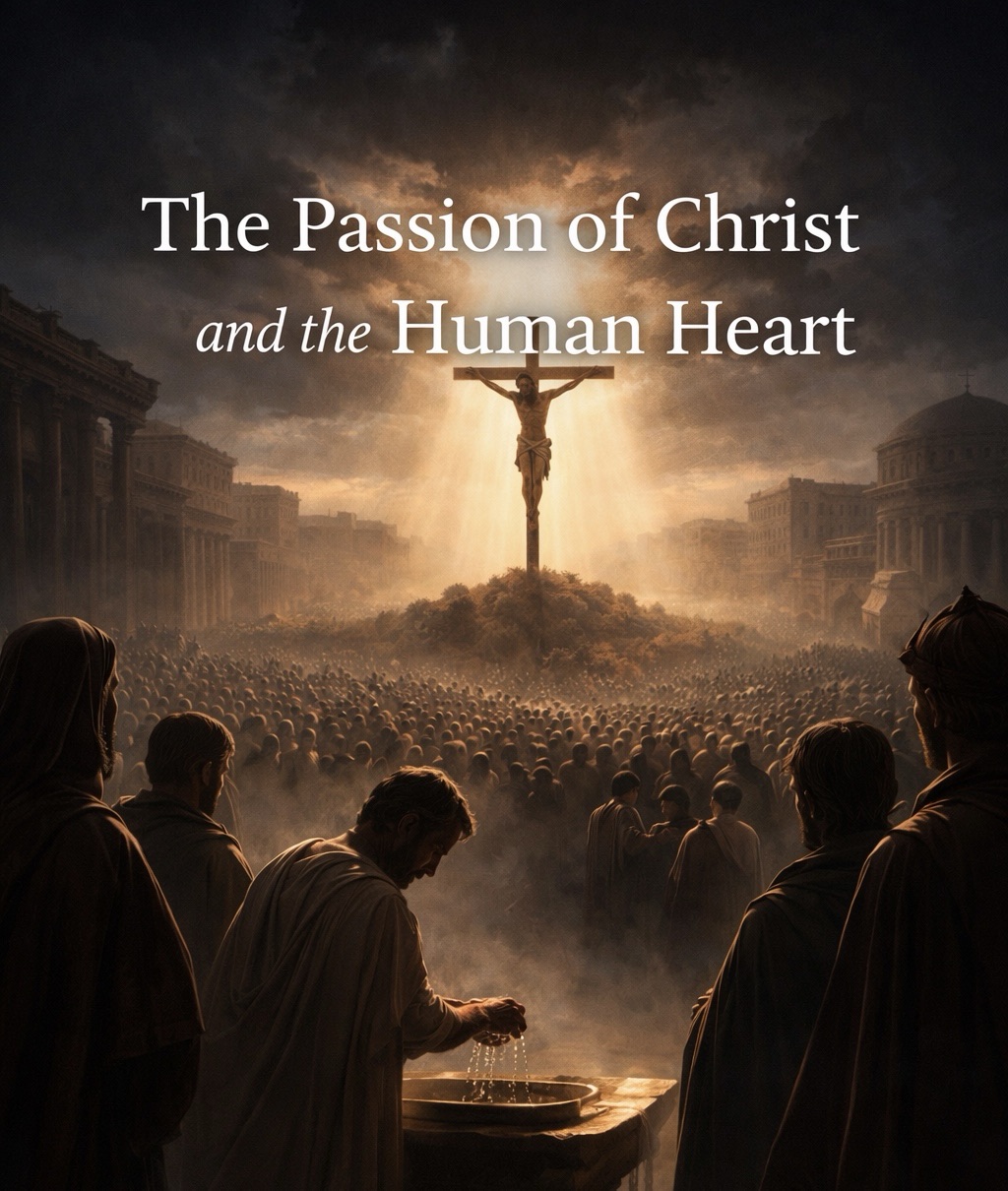
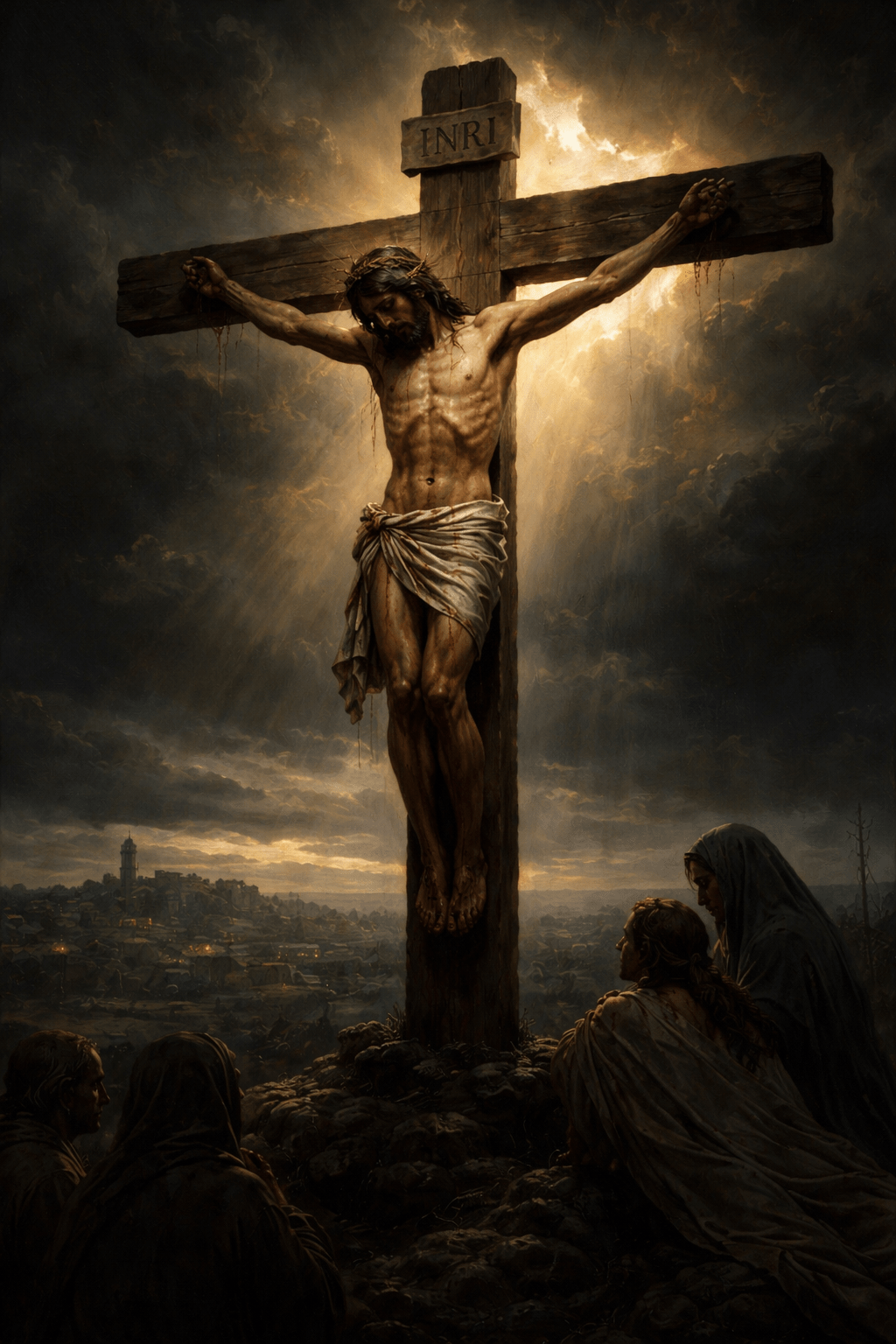
“The Passion of Christ reveals not only the suffering of Jesus, but the struggle within every human heart — between fear and truth, darkness and light.”
Each Lent invites us to walk once more with Christ on the road to Calvary. We remember His suffering, His sacrifice, and the mystery of the Cross. Yet the Passion of Jesus is not only a sacred event from the past — it is also a window into the human heart. As we follow Him through the final days of His earthly life, we begin to see not only the suffering of Christ, but also the political pressures, fears, ambitions, and misunderstandings that surrounded Him. In that unfolding story, we may also begin to recognize something of ourselves.
For the Passion does not only reveal who they were — it quietly reveals who we are.
In past Lenten seasons, my reflections have focused almost entirely on Jesus Himself — His suffering, the physical agony of the Cross, and what His sacrifice means for me personally.
This year, however, my attention has been drawn to something different:
the political, social, economic, and religious forces surrounding Him.
The Passion of Christ did not unfold in a vacuum. It took place within a complex human world — one that, in many ways, resembles our own.
Judea at the time was under Roman rule. The region had long been shaped by the legacy of Herod the Great, a Jewish client king appointed by Rome. Herod was known as a great builder; he expanded and magnificently renovated the Second Temple in Jerusalem. Yet his reign also fostered a political and religious aristocracy tied closely to Roman authority.
By the time of Jesus’ ministry, the Roman province of Judea was governed by Pontius Pilate, the fifth Roman prefect, who ruled under Emperor Tiberius from approximately AD 26 to 36.
Within this environment existed various Jewish religious groups — Pharisees, Sadducees, scribes, and others — who themselves often disagreed on doctrine and authority. Yet many among the leadership grew wary of Jesus because of the powerful influence He had over the people.
The Jewish people longed for a Messiah. Many hoped for a liberator who would free them from Roman domination.
But Jesus revealed a different kind of freedom.
“My kingdom is not of this world.”
— John 18:36
The freedom He proclaimed was not political liberation, but spiritual liberation — freedom from sin, fear, and death.
This misunderstanding lies at the heart of the Passion narrative.
According to the Gospel accounts, Pontius Pilate repeatedly declared that he found no guilt in Jesus (Luke 23:4; John 18:38). Even Herod Antipas, who had earlier ordered the execution of John the Baptist, found no crime worthy of death in Him (Luke 23:15).
Yet despite recognizing His innocence, Pilate ultimately yielded to pressure.
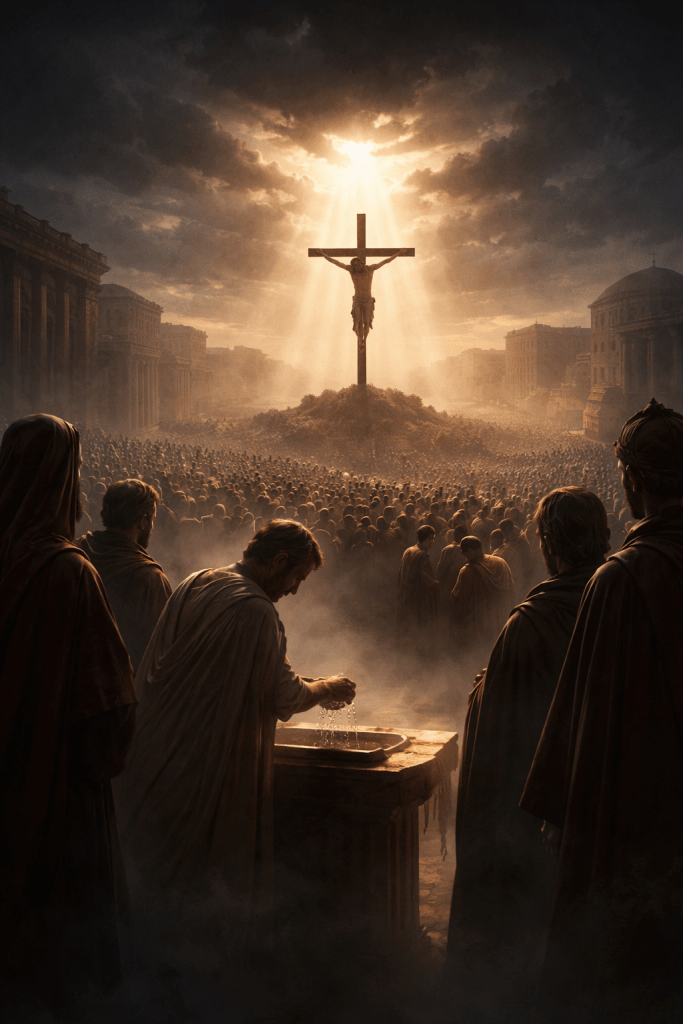
“So when Pilate saw that he was gaining nothing… he took water and washed his hands before the crowd, saying, ‘I am innocent of this man’s blood.’”
— Matthew 27:24
To preserve political stability and appease the religious leaders, Jesus was handed over to be crucified — while a criminal, Barabbas, was released in His place (Matthew 27:21–26).
The Passion reveals something profoundly human.
The Roman authority, knowing Jesus was innocent, chose political convenience over justice.
Some religious leaders, fearing the loss of their authority, mocked Him as “King of the Jews” and condemned Him as a blasphemer (Mark 15:26).
The crowd — easily swayed — cried out for His death.
“Crucify Him!”
— Luke 23:21
And then there were His followers.
Peter denied Him three times (Luke 22:61).
Thomas doubted (John 20:25).
Judas betrayed Him for thirty pieces of silver (Matthew 26:14–16).
The Passion story is therefore not only divine — it is deeply human.
It exposes the darkness that can live in every human heart: fear of losing power, willingness to compromise truth, the ease with which people can be swayed by narratives that are not rooted in justice.
Yet it also reveals something else.
The disciples — flawed, fearful, and uncertain — are not so different from us. We recognize truth, yet hesitate when it costs us something.
We follow the crowd when standing alone feels too difficult.
We remain silent when we should speak.
Like them, we struggle with weakness. Like them, we fail and doubt. And yet, through the grace of God, we are continually invited to become something more.
Jesus’ story reveals both the darkness of humanity and the mercy of God.
“The light shines in the darkness, and the darkness has not overcome it.”
— John 1:5
His disciples — and all who follow Him — are called to keep that light alive.
To continue striving to become better people.
To walk in truth even when it is difficult.
To allow the light of Christ within us to shine outward, despite our imperfections.
For Christ did not die merely to reveal the darkness of the world.
He died so that we might be free.
“So if the Son sets you free, you will be free indeed.”
— John 8:36
And so the Passion of Christ is not only the story of what happened to Jesus long ago — it is a living question placed before every human heart today: when truth stands before us, will we turn away in fear — or will we have the courage to remain in the light?
God Bless 🙏💕

 Be Inspired!
Leave a comment