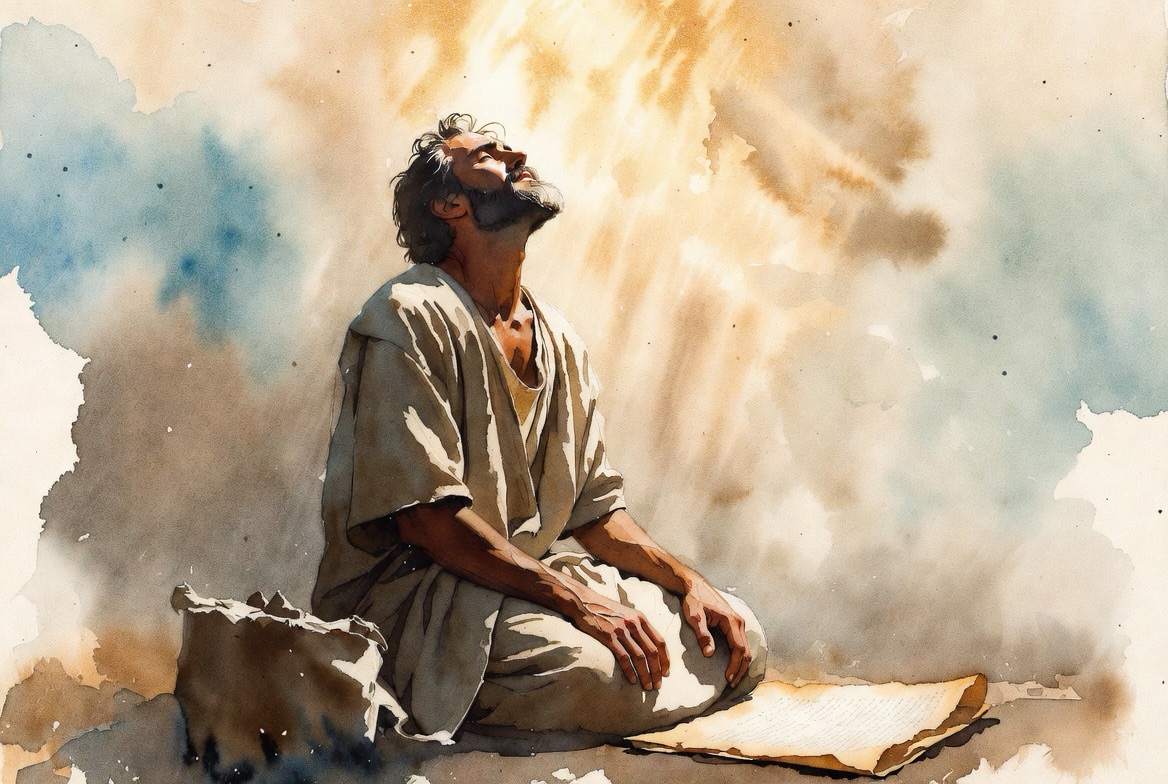
One thread running through Scripture is human fragility.
The other is God’s unwavering faithfulness.
Again and again, we encounter ordinary people marked by weakness, waiting, failure, and hope. Yet through every story we also encounter the same faithful God—patient, merciful, and steadfast in His covenant love.
Daniel’s prayer in chapter nine is one of those moments.
Before it is a prophecy, it is a prayer. It is the honest cry of a man who knew both the brokenness of the human heart and the enduring mercy of God.
Beginning with Scripture
Daniel had spent decades living in exile. As he read the writings of the prophet Jeremiah, he realized that the promised years of exile were drawing to an end.
His response is striking.
He did not rush to speculate about what would happen next.
He turned to God.
“I turned to the Lord God, to seek help, in prayer and petition, with fasting, sackcloth, and ashes.” (Daniel 9:3)
There is something deeply beautiful in this simple movement.
Daniel allowed the Word of God to shape his prayer.
Perhaps this is one of the chapter’s greatest invitations. Scripture is not merely something we study. It is something that forms our hearts and draws us into conversation with God.
Human Fragility and God’s Faithfulness
Daniel begins by remembering who God is before speaking of himself.
He praises God’s faithfulness.
He confesses the sins of the people.
He does not point fingers or place blame. Instead, he repeatedly prays, “We have sinned.”
Although Daniel is remembered as a faithful servant of God, he humbly places himself among his people. His prayer is not one of self-righteousness but of compassion and repentance.
As I reflected on this chapter, I found myself returning once again to a familiar theme.
One thread running through Scripture is human fragility.
The other is God’s unwavering faithfulness.
We see it in Abraham.
In Moses.
In David.
In Jonah.
In Peter.
And here again in Daniel.
Human beings wander.
We become distracted.
We fail to listen.
Yet God’s covenant love remains.
Daniel never minimizes sin, but neither does he lose hope. He knows that restoration cannot be earned. It is received through God’s mercy.
That, perhaps, is the very heart of the Gospel.
A Prayer for Our Own Time
While Daniel was still praying, God answered.
The vision that follows points beyond the immediate restoration of Jerusalem toward God’s greater work of redemption—a hope that Christians ultimately see fulfilled in Jesus Christ.
Yet perhaps Daniel’s greatest gift is not a prophetic timeline.
It is a way of praying.
To begin with Scripture.
To remember God’s faithfulness.
To confess honestly.
To trust mercy more than ourselves.
To pray not only for “me,” but for “us.”
We may not find ourselves living in Babylon, but many of us know what spiritual exile feels like. We know seasons of waiting, uncertainty, and concern for our families, our communities, and our world.
Daniel reminds us that these moments need not lead us into fear.
They can lead us into prayer.
A Gentle Invitation
If you have never read Daniel 9 slowly, I encourage you to spend some quiet time with it this week.
Read it as a conversation rather than simply a historical account.
Notice how Daniel continually turns his attention back to God.
Perhaps allow his prayer to become your own.
Bring before the Lord the places in your own life that long for healing, forgiveness, or restoration. Pray for your family, your Church, your community, and those who have wandered far from hope.
Then wait quietly.
The God who heard Daniel still hears His children today.
For one thread running through Scripture is indeed our human fragility.
But woven through every page is something even greater—
God’s unwavering faithfulness.




Leave a Reply