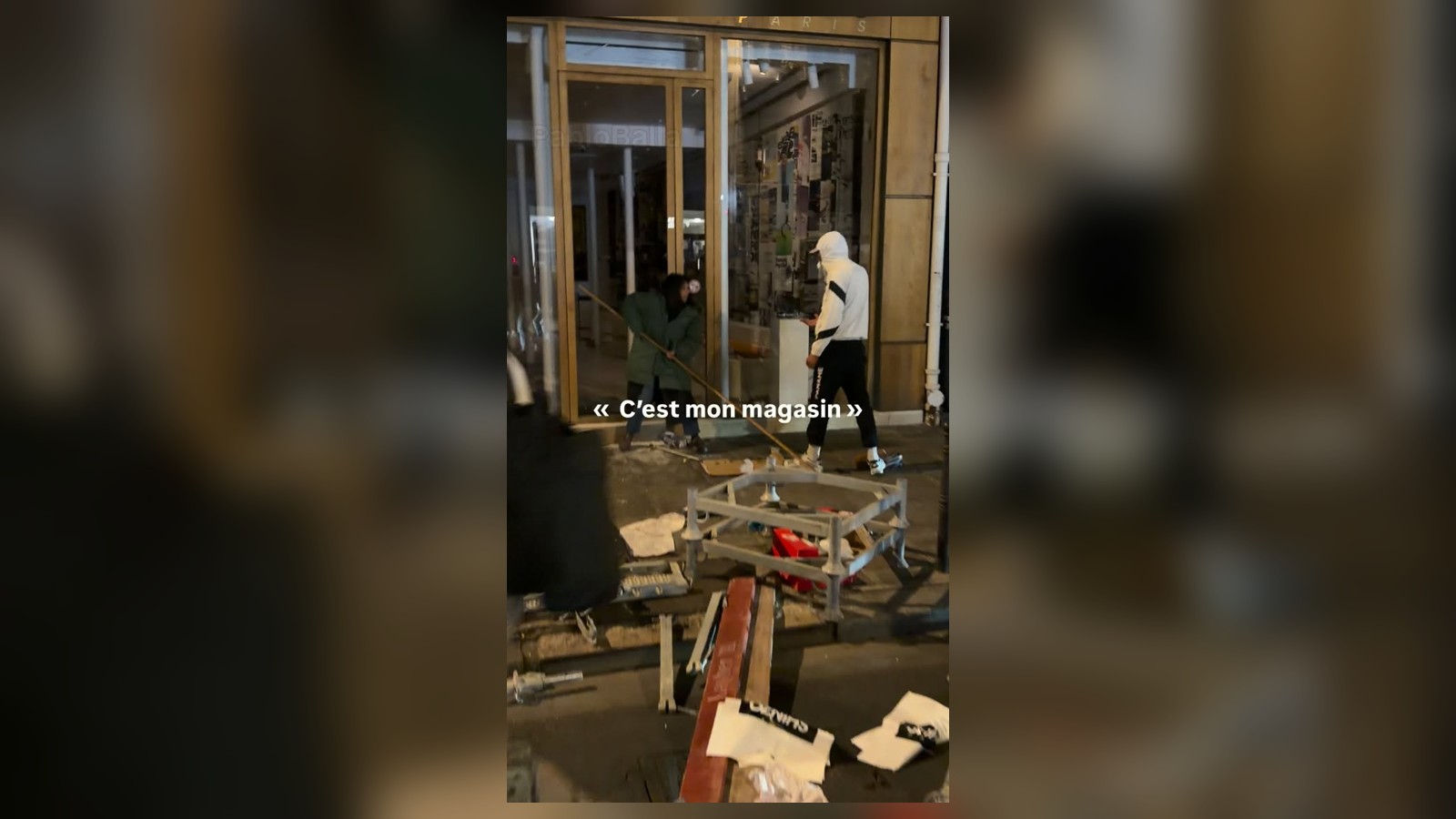
A video crossed my feed late one night: masked figures trying to rob a woman’s shop, and a small line of ordinary people standing in front of it, holding them back. Then came the comments — and the whole thing turned into an accusation about race, when the very people being accused were the ones standing guard at her door.

I almost commented. I didn’t. But the video stayed with me, because it took me back.
In my youth, in Toronto, we marched. We marched in the no-nukes demonstrations, and stood with gay friends during the bathhouse raids, when simply standing beside them took some courage. Our demonstrations were for a cause. Yes, there were confrontations with police, and moments that frightened us — but never breaking storefronts. Never stealing. The risk we took was to ourselves, not to someone else’s livelihood.
Many of those first rallies were at my father’s side. He believed in showing up — at a demonstration, and later at his own table, where there was always room for one more. The standing was learned from him.
So much of what passes for protest today feels different. Too often a rally slides into destruction — smashed windows, emptied shelves — less about a cause than about the pull of a crowd, where a few bad seeds strike the spark and the rest hide behind masks. A mask worn to march for justice is one thing. A mask worn to steal is another.
But here’s what keeps coming back in that video: the line in front of the shop. Strangers, standing shoulder to shoulder in front of something that wasn’t theirs, saying: not here. No slogans. No crowd. Just standing.
Maybe that was always the thread. The point was never the crowd — it was the standing. Standing with friends when it cost something. Standing in front of a shop when walking on would have been easier.
We’re grateful people still stand.
Within hours, her worst night no longer belonged to her. The story became a tool — picked up, trimmed, pointed. Some blamed a whole people. Others answered that France was born of revolution, as if that settled it. Almost no one stayed with the woman in the doorway, or asked the quieter question: what happens to any of us inside a crowd, when a few bad seeds strike the spark and conscience quietly slips away? History, read honestly, doesn’t hand us a license. It hands us warnings. And judging hearts was never our job. It’s God’s.
So where is God in a night like that? Maybe the better question is the one her doorway asks back: where is the light within our humanity? It was there in the strangers who stepped in front of a shop that wasn’t theirs — small, stubborn, ordinary light, the kind that never makes the news. A crowd can go dark in a moment; the light doesn’t go out. It just grows quieter, and stands closer together.
Above all, this is written by a daughter of immigrants — my father crossed an ocean for the Golden Mountain, and his table was open to strangers because he had once been one. So the question can’t be judgment.
This isn’t a question for judging anyone in that crowd — judgment belongs to God. It’s a question for discernment: to look within and ask, honestly — where is my light? Where is God in me, when the moment comes?
Years of standing teach what we couldn’t have known at a father’s side: crowds rarely change hearts. Flags and slogans come and go. Real change comes quietly, from within — one person at a time, and only by the grace of God. That’s not despair. That’s where hope actually lives.
Featured image: a frame from a video by Pablo Balla on Instagram — a Paris shopkeeper defending her store: “C’est mon magasin” — “It’s my shop.”


Leave a Reply